Published by Coldwell Banker Caribe | July 2026 | Caribbean Coast Costa Rica
Estimated read time: 6 minutes | Category: Lifestyle & Ownership
Most people picture ownership on the Caribbean coast in a single frozen image: a hammock, an ocean view, a cold drink at sunset. That image isn’t wrong, but it’s incomplete. Ownership here is a rhythm, not a postcard, and the difference between the two is what actually determines whether a buyer loves this coast for the next twenty years or sells after two.
So instead of another list of market statistics, this is a walk through an actual day, the kind our clients describe to us once they’ve settled in. It’s meant to answer the question we hear most often in our first conversation with a buyer: “But what do you actually do all day out there?”
This is written for the buyer who’s past the fantasy stage and wants to know if the reality holds up. In our experience, for the right kind of person, it holds up and then some.
6:00 AM: The Coast Wakes Up Early
Mornings on the Caribbean coast start with sound before anything else, howler monkeys in the canopy, birdsong that doesn’t quite match anything from home, and often rain on a zinc roof that clears by breakfast. Property owners who work remotely tend to use these early hours for focused work, before the heat sets in and before video calls with US or European colleagues, depending on time zone overlap.
Coffee is usually local, often from small producers in the Talamanca mountains just inland, and the morning light through the jungle canopy is the thing most owners say they didn’t expect to matter as much as it does.
8:30 AM: Errands That Don’t Feel Like Errands
A grocery run in Puerto Viejo or Cocles looks different than one at home. The open-air markets and local sodas mean errands double as social time, a chat with a neighbor, a stop at a fruit stand, a wave from someone recognized from the beach the day before. Full-time residents describe this as the single biggest adjustment, in the best way: life slows down enough that errands stop feeling like a chore to get through.
For anything beyond the basics, a trip to Limón covers banking, larger shopping, or a pharmacy visit, about 45 minutes to an hour depending on the property’s exact location.
11:00 AM: Managing the Property Itself
Ownership here comes with real responsibilities that don’t exist in a condo in a US suburb: checking on jungle growth that encroaches faster than expected, coordinating with a property manager if the home operates as a vacation rental, or handling maintenance that tropical humidity makes more frequent than buyers initially plan for.
Many owners on this coast build a relationship with a local caretaker or property management company early on, particularly if the home isn’t occupied year round. This is one of the most practical pieces of advice we give new buyers: budget for property management from day one, even if the plan is full-time residence, because the tropical climate is unforgiving to homes left unattended even briefly.
1:00 PM: Lunch and the Social Fabric of the Coast
The Caribbean coast has one of the most genuinely mixed communities in Costa Rica, longtime Costa Rican and Afro-Caribbean families, Costa Ricans from other regions, and a steadily growing population of expats from North America and Europe. Lunch might happen at a family-run soda, a beachfront restaurant in Cocles, or at home with ingredients from the morning market.
This social layer is what separates the buyers who stay long term from the ones who don’t. Owners consistently tell us the community, not the beach itself, is what makes the investment feel worth it.
3:00 PM: The Beach, on a Weekday
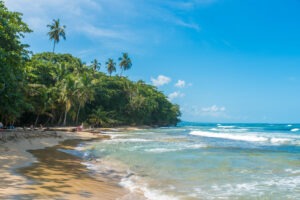
This is the hour that doesn’t exist in most other markets: a weekday afternoon at Playa Cocles, Playa Chiquita, or Punta Uva, uncrowded, with warm water and reef-protected breaks that are gentler than the open Pacific surf many buyers are used to. Surfing, paddleboarding, or simply reading in the shade of an almond tree becomes a normal Tuesday rather than a rare vacation moment.
For owners who split time between the coast and a home country, this is the hour they say they miss most when they’re away.
6:00 PM: Sunset and the Evening Slowdown
Evenings arrive with a version of golden hour that photographs poorly and undersells itself every time. Dinner is often simple and fresh, casado plates, fresh-caught fish, Caribbean-influenced coconut rice and beans that taste nothing like their Pacific-coast counterparts. Reggae and calypso rhythms drift from a handful of local spots in Puerto Viejo proper, a cultural signature unique to this stretch of coast.
By 8 or 9 PM, most of the area has genuinely quieted down, a detail that surprises buyers expecting a party town. Puerto Viejo has nightlife if you want it, but daily life here revolves around early mornings, not late nights.
What the Rhythm Actually Requires From an Owner
None of this happens automatically. The buyers who thrive here share a few traits: patience with a slower pace of bureaucracy and service, a willingness to build real relationships with neighbors and local staff, and realistic expectations about the tropical climate’s effect on a property. The buyers who struggle are usually the ones who bought the postcard without accounting for the rhythm underneath it.
Frequently Asked Questions: A Day in the Life
Is Puerto Viejo a good fit for full-time living, or mostly a vacation destination?
Both, depending on the buyer. A growing number of expats and remote workers live in Puerto Viejo and the surrounding area full time, drawn by the infrastructure improvements of recent years and the strength of the local community. Others use it as a seasonal or vacation property. The town supports both models comfortably.
Do I need to speak Spanish to live comfortably in Puerto Viejo?
It helps, but it isn’t required for daily life in town, since English is widely spoken due to the area’s international community and Afro-Caribbean heritage, where English and Creole English are historically spoken alongside Spanish. That said, learning Spanish deepens the experience and is genuinely useful outside the immediate tourist zones.
How much does property upkeep really cost in a tropical climate like this?
More than most buyers initially budget, largely due to humidity, jungle growth, and salt air accelerating wear on exteriors, wood, and metal fixtures. Regular maintenance and a good local caretaker or property manager are essential rather than optional, and buyers should factor this into their annual ownership costs from the start.
What’s the biggest lifestyle adjustment for new owners?
Pace. Errands, permits, deliveries, and repairs all move slower than in the US or Europe. Owners who adapt their expectations to “Caribbean time” tend to be the happiest; those who fight it tend to be frustrated regardless of how beautiful the property is.
How Coldwell Banker Caribe Helps Buyers Find Their Rhythm
We don’t just show properties, we walk buyers through what a real day looks like, because the right fit matters more than the right square footage. With 23+ years on this coast, our team has watched hundreds of buyers make this transition, and we know which properties suit full-time living, which work better as rental investments, and which neighborhoods match a buyer’s actual daily habits rather than their vacation fantasy.
As the only established Coldwell Banker franchise on the Caribbean coast, we pair that lived-in local knowledge with a global network built for buyers relocating from anywhere in the world.
Contact Coldwell Banker Caribe: coldwellbankercaribe.com